
Rescue on the Thames
The work of the Tower RNLI Lifeboat Station
It’s a June Saturday morning in London. We used to call this part of the year summer, but other than temperature deviations there is little weather difference these days between the seasons.
Nevertheless it is a pleasant enough day on the Thames. And despite not being on a boat, we are indeed properly on the Thames, gently undulating and occasionally less gently jolting (wash from passing vessels) on the pontoon that forms the Tower Royal National Lifeboat Institution (RNLI) Station.
The specialist local London guides like to develop their knowledge, so this is a visit by the Westminster Guide Lecturers Association, usually known as the Westminster Guides. Our RNLI guide for the tour, Andrew, welcomes us aboard and despite the erudition of the guests kicks off nervelessly – perhaps his previous profession of barrister helps – in the Station’s well-appointed training room.
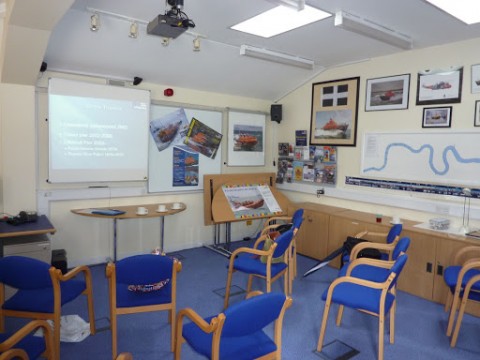
We are by Waterloo Bridge, which prompts an early question on why call it the Tower Lifeboat Station. The reason is that the Station, in a less convenient set-up, used to be by Tower Bridge, and when it moved it was thought easiest to keep the name as the Station was known as Tower for call-signs.
Andrew sets out the RNLI’s stall. It is the charity that saves lives at sea – it also provides a lifeguard service.
An irresistible response is to ask why the organisation is an independent charity and not funded by the public sector. Andrew points out that the model for sea search and rescue services differs from country to country, and that the RNLI is proud of its independence and its ability to set its own high standards in conformity with best international practice.
The price of this independence is the high dependency of the RNLI on voluntary contributions and legacies for its funding, a fact worth bearing in mind if you are ever asked to support an appeal or have any other financial support opportunity.
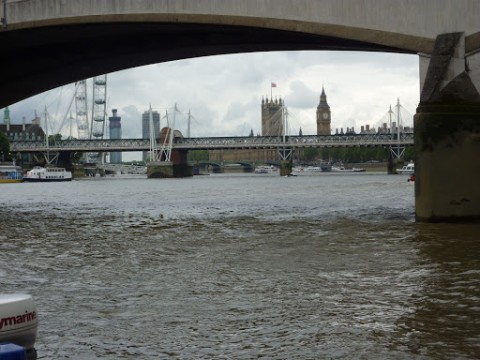
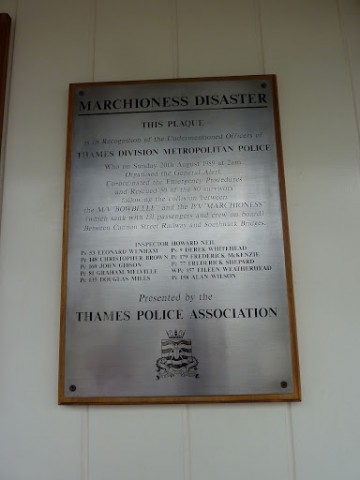
The second irresistible response is what is a sea rescue service doing with a Station on a river? The answer is that the Thames Station came from the Marchioness disaster, when 51 people were drowned in the Thames in August 1989 after the Marchioness pleasure boat was run down by the dredger Bowbelle.
Andrew explains the dangers of the Thames – a river heavily tidal for a long way up stream, with strong currents, and water easily capable of inducing hypothermia. We start to reflect on the lunacy of those who do such things as daredevil spontaneous swims.
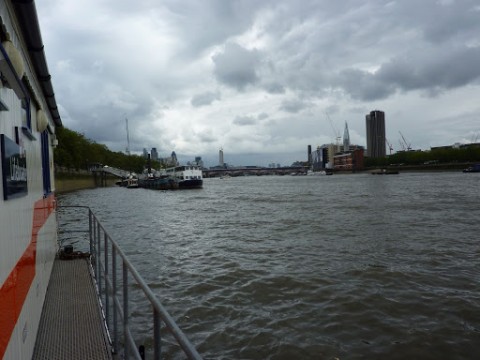
We move outside now to admire the station’s new jet boat, capable of up to 40 knots of speed, and the little boys amongst us admit that we’d enjoy a ride on it.
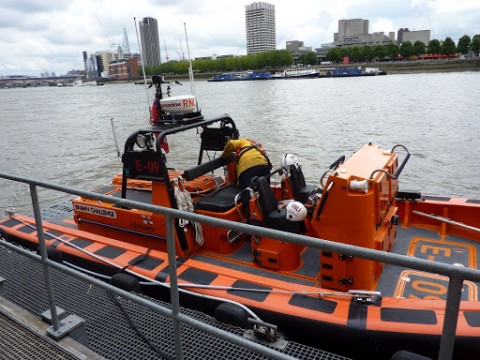
Then a bell rings, and we are in the middle of an incident or “shout”. We are warned to keep clear of doorways for fear of being of knocked over by a kitted out crew member. One of our visitor number suggests that that might not be an entirely unpleasant experience, prompting thoughts of how the late, great Kenneth Williams would have responded.
More seriously, we now become aware of the detail of the incident – a man is threatening to jump from Westminster Bridge. Andrew explains that the lifeboat’s duty here is to wait below the bridge and give assistance if needed. The call-out could take anything from minutes to hours, dependent on how the drama plays out on the bridge. Effective liaison by Tower with London’s Metropolitan and City police forces is vital.
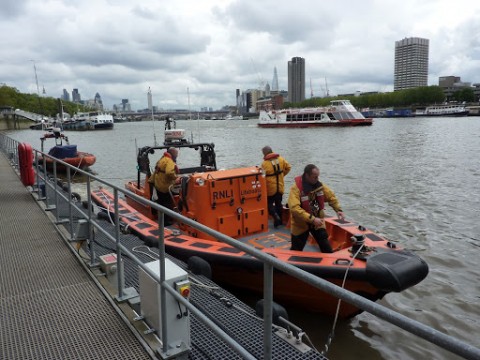
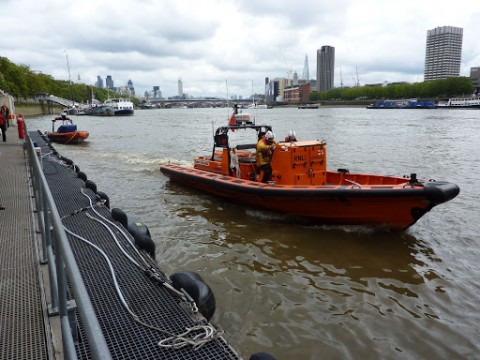
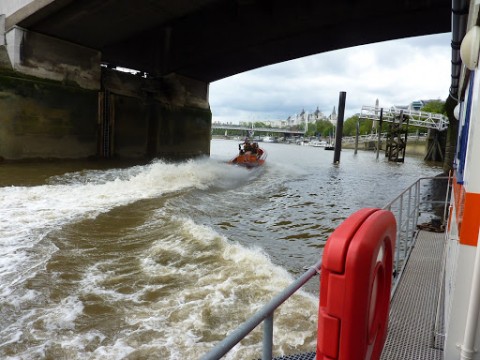
As can be seen, the crew of the Thames lifeboat numbers three. The skipper and one crew member are employed lifeboatmen, whilst the third crew member is a volunteer. At any time (24/7) there is a permanent crew of three on duty, and the boat can be scrambled in under two minutes from the bell ringing.
Tucked away in sleeping quarters during our visit is the crew on current night shift, although with our blathering questions we are not sure how much peace the night shift is getting.
With the crew away on duty, we inspect the kit room. A guide visitor volunteers to don the gear. The finished product looks perfectly good, but less my esteemed colleague would feel embarrassed by seeing the photo published, I am going to leave that one out.
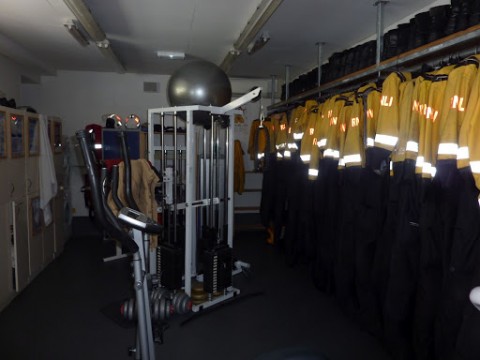
The photo shows exercise equipment. This is not designer-living luxury, but a way of the crew keeping fit during the long duty periods. The funds for the equipment come from outside the donations and legacies that fund the core service, and the Station has been lucky to have occasional donations of equipment from gym businesses.
We then move to the fully-equipped medical room. Rescues range from the classic drowning person scenario to taking a seriously unwell guest off a pleasure boat.
The service works closely with the London Ambulance Service, often swapping kit. Andrew points out that it would be ill-mannered at minimum to expect an injured person to shift from the Station’s stretcher to the Ambulance stretcher. Where the Station’s stretcher disappears into the ambulance, the stretcher will be dropped back during a quiet time a few hours later.
The jet boat returns. The crew were apparently told the wrong bridge – it was Lambeth Bridge instead. But the incident ended quickly and happily, with the police talking the man off the edge. Apparently, those who have jumped but have been saved, have sometimes returned after months or years to thank the Station.
The published information on the RNLI generally and the Tower Station, is detailed and fascinating. If the work interests you, please follow the links above and browse.
At one point we ask about lifeboatmen loss of life during duty. This is apparently a very rare experience due to quality of craft, equipment and training. But it has happened.
Andrew tells the story of one incident, which culminated with radio messages dropping off into silence. Our urbane guide has to pause a moment to clear his throat and regain composure.
That’s what got us about the visit and hearing about what these people do. It is a rich mix of passion and professionalism. We were uplifted.
The author is a City of London and City of Westminster guide, and former law firm partner, who leads walking tours in the City and in Westminster. See tabs for more information.